

How Are Solar Panels Made?
Solar technologies convert sunlight into electrical energy either through photovoltaic (PV) panels or through mirrors that concentrate solar radiation. This energy can be used to generate electricity or be stored in batteries or thermal storage.
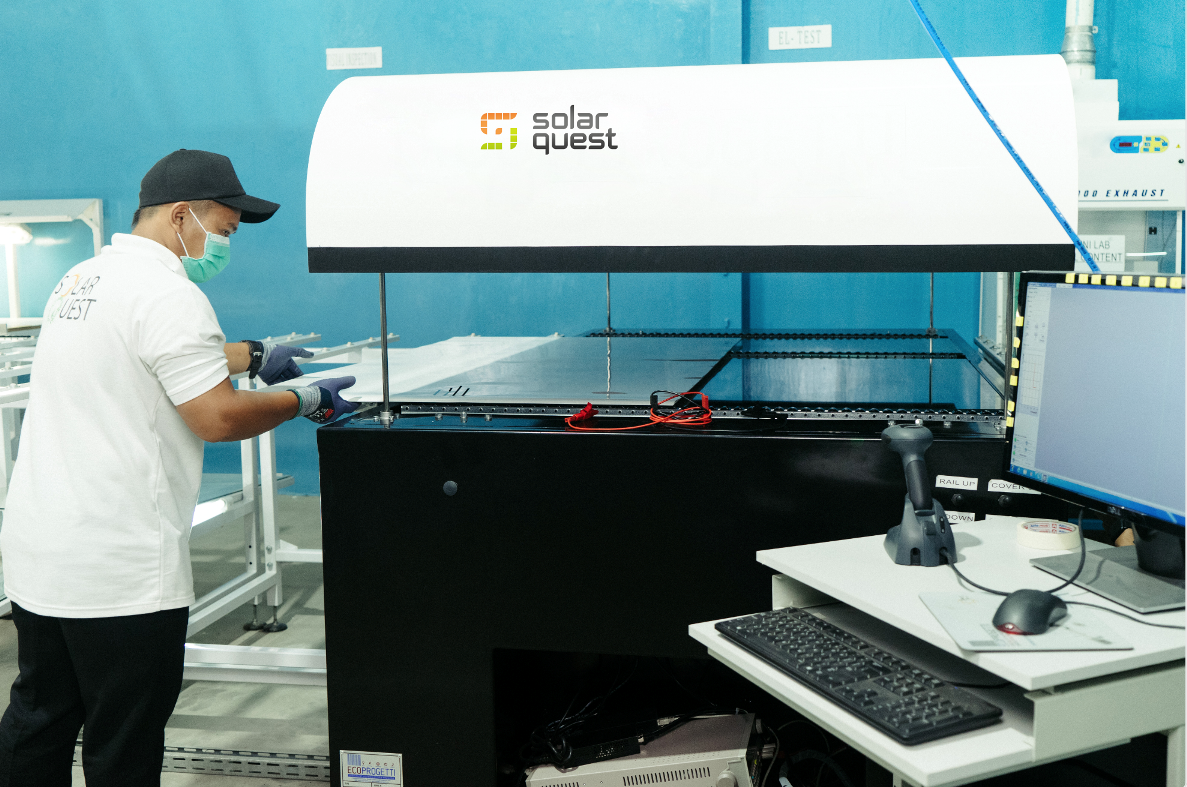
You can find solar panel manufacturers in many places, ranging from the United States to Europe, but most solar panels are made in various countries within Asia like here in our factory in Indonesia.
At the most basic level, the key components of a solar panel are solar PV cells, polysilicon or silicon, metal, and glass. The most important component is the solar cells which convert sunlight into usable energy. Solar cells are the photovoltaic (PV) component of solar panels, meaning they produce energy from the sun.
Solar cells are made up of silicon and are protected by a sheet of glass over the panels which allows sunlight to be filtered to the cells. When exposed to sunlight, solar silicon dioxide cells generate an electric current, which is then converted to usable AC electricity via an inverter.
Solar cells are assembled using wiring that transfers the electricity. This wiring is soldered to the cells which are then assembled between a back sheet and the glass that protects the cells. The entire panel is held together with a metal frame.
This is an oversimplified process for how solar panels are made, so let’s break down the manufacturing process step by step for a better understanding.
Step 1: Build solar silicon cells that are either p-type or n-type, meaning positively or negatively charged. P-type silicon cells were the traditional structure of solar cells. A p-type silicon cell is built on a positively charged base, meaning the bottom layer is mixed with boron and the bottom layer is mixed with phosphorus.
But the n-type cell is built oppositely, with the phosphorus serving as the base. The main difference is that n-type cells offer more efficiency and they are not affected by light-induced degradation, or reduction in output when exposed to extreme sunlight.
Solar cells are made with crystalline silicon that is melted and mixed with gallium or boron to form wafers called silicon ingot. Phosphorous is then added to the silicon, and along with the gallium or boron, these substances give silicon its electrical capability.
The silicon ingot is then cut into thin sheets and an anti-reflective coating is applied to capture the sunlight instead of reflecting it away from the panels. Thin lines are then cut into the cells to capture and move the electrical current within the cell.
The solar cells become semiconductors of electricity which is generated by the photovoltaic effect, when the sunlight's photons are absorbed, electrons then drift within the solar cells to create energy.
Monocrystalline solar panels are formed from one silicon fragment but for polycrystalline panels, many silicon fragments are melted together in one large sheet to form the silicon wafers for the solar panel.
Step 2: Solder solar cells together to form one panel, usually 60 or 72 solar cells form one panel
Step 3: Install the back sheet which protects the bottom of the solar cells
Step 4: Install glass front. This allows light to filter through to the solar cells and provides a protective layer
Step 5: Seal a metal frame around the panel with silicon to fuse all of the layers together
Step 6: Install the junction box which protects the solar panel's electrical wires from damage
Step 7: Test solar panel for quality and strength before shipping out for use
After testing solar panels for quality, they are ready to be shipped out and installed on homes or for solar farm use. The manufacturing process for different types of solar panels is pretty similar, but there are a few types of solar panels and each type has its own strengths.
During the entire manufacturing process, the materials that are used to build the panels are monitored for any defects. For example, any cracked or bent solar cells are discarded.
Once solar panels are built, they go through rigorous testing to make sure that they can stand up to intense weather conditions, heat, and normal wear and tear. Additionally, it is important to test that the electrical current travels through the panels efficiently.
Finally, solar modules are tested for strength to make sure that they have a low likelihood of breaking due to hail or other falling debris. Testing the quality of solar panels is important to make sure they can generate electricity while being able to last their entire lifetime.
At the most basic level, the key components of a solar panel are solar PV cells, polysilicon or silicon, metal, and glass. The most important component is the solar cells which convert sunlight into usable energy. Solar cells are the photovoltaic (PV) component of solar panels, meaning they produce energy from the sun.
Solar cells are made up of silicon and are protected by a sheet of glass over the panels which allows sunlight to be filtered to the cells. When exposed to sunlight, solar silicon dioxide cells generate an electric current, which is then converted to usable AC electricity via an inverter.
Solar cells are assembled using wiring that transfers the electricity. This wiring is soldered to the cells which are then assembled between a back sheet and the glass that protects the cells. The entire panel is held together with a metal frame.
This is an oversimplified process for how solar panels are made, so let’s break down the manufacturing process step by step for a better understanding.
Step 1: Build solar silicon cells that are either p-type or n-type, meaning positively or negatively charged. P-type silicon cells were the traditional structure of solar cells. A p-type silicon cell is built on a positively charged base, meaning the bottom layer is mixed with boron and the bottom layer is mixed with phosphorus.
But the n-type cell is built oppositely, with the phosphorus serving as the base. The main difference is that n-type cells offer more efficiency and they are not affected by light-induced degradation, or reduction in output when exposed to extreme sunlight.
Solar cells are made with crystalline silicon that is melted and mixed with gallium or boron to form wafers called silicon ingot. Phosphorous is then added to the silicon, and along with the gallium or boron, these substances give silicon its electrical capability.
The silicon ingot is then cut into thin sheets and an anti-reflective coating is applied to capture the sunlight instead of reflecting it away from the panels. Thin lines are then cut into the cells to capture and move the electrical current within the cell.
The solar cells become semiconductors of electricity which is generated by the photovoltaic effect, when the sunlight's photons are absorbed, electrons then drift within the solar cells to create energy.
Monocrystalline solar panels are formed from one silicon fragment but for polycrystalline panels, many silicon fragments are melted together in one large sheet to form the silicon wafers for the solar panel.
Step 2: Solder solar cells together to form one panel, usually 60 or 72 solar cells form one panel
Step 3: Install the back sheet which protects the bottom of the solar cells
Step 4: Install glass front. This allows light to filter through to the solar cells and provides a protective layer
Step 5: Seal a metal frame around the panel with silicon to fuse all of the layers together
Step 6: Install the junction box which protects the solar panel's electrical wires from damage
Step 7: Test solar panel for quality and strength before shipping out for use
After testing solar panels for quality, they are ready to be shipped out and installed on homes or for solar farm use. The manufacturing process for different types of solar panels is pretty similar, but there are a few types of solar panels and each type has its own strengths.
During the entire manufacturing process, the materials that are used to build the panels are monitored for any defects. For example, any cracked or bent solar cells are discarded.
Once solar panels are built, they go through rigorous testing to make sure that they can stand up to intense weather conditions, heat, and normal wear and tear. Additionally, it is important to test that the electrical current travels through the panels efficiently.
Finally, solar modules are tested for strength to make sure that they have a low likelihood of breaking due to hail or other falling debris. Testing the quality of solar panels is important to make sure they can generate electricity while being able to last their entire lifetime.